E-liquid for beginners: where to start
A disappointing first bottle almost always has the same three causes: a flavour chosen for its label, a strength picked at random, and a device that does not render what was expected. Three variables, three chances to get it wrong. Choosing an e-liquid for beginners works far better when those three are settled in a deliberate order rather than all at once at the counter.
The three settings behind any first e-liquid for beginners
Strength, flavour and format. Everything else, the brand, the packaging, the shop, sits downstream of those three, and getting them in the wrong order is what sends people back for a second and third bottle within a fortnight.
Strength comes first because it decides whether the bottle satisfies at all. Flavour comes second because it decides whether you finish it. Format comes last because it decides how the other two are actually delivered.
British rules narrow the field helpfully here. Nicotine containing e-liquid is sold in bottles of no more than 10 ml at a maximum of 20 mg/ml, prefilled and refillable tanks are capped at 2 ml, and none of it is sold to anyone under 18.
Nicotine strength: how the rules frame the choice
Bottles on British shelves fall into a handful of steps below the 20 mg/ml ceiling, and shops usually stock the same ladder from one brand to the next. What no article should do is tell you which rung is the right one, because that depends entirely on the individual.
What is worth understanding is what the number means. A strength in mg/ml is a concentration, so the same figure delivers very differently depending on how much vapour your device produces and how often you use it.
That is why a high power device paired with a high strength is a combination people regret quickly, and why low strengths in a tight draw pod often feel like nothing at all. The concentration and the hardware are one decision, not two.
If you ever move on to mixing your own, the arithmetic is worth knowing: multiply the final volume by the strength you are aiming for and divide by the strength of the nicotine shot. Our e-liquid mixing chart works through that calculation for the usual bottle sizes.
Freebase or nicotine salts, and what actually changes
British shelves carry both, side by side, usually at the same strengths. The difference is chemical rather than a matter of quantity, and it is felt in the throat.
Freebase nicotine gives a more pronounced throat sensation at a given strength, which some people want and others find harsh. It is the traditional format and it dominates the 50/50 bottles aimed at tight draw hardware.
Nicotine salts are formulated to feel smoother at the same figure on the label. That smoothness is exactly why the strength on a salt bottle deserves reading carefully, since the sensation gives you less feedback than freebase does.
Neither is a beginner format by nature. What matters is that the two are not interchangeable at equal numbers, and swapping one for the other without adjusting anything is a common source of an unpleasant afternoon.
Choosing a first flavour that survives more than three days
The classic second mistake is aiming too high. A complex profile charms on the first puff and becomes cloying over a full day, which is how half finished bottles accumulate in a drawer.
Four families cover most of the shelf. Tobacco profiles run from light and dry to dark and heavy. Menthol and ice profiles are easy to read and tire the palate slowly. Fruits suit long days. Desserts are richer and work better as an occasional bottle than an all day one.
The useful reflex is to start legible and widen afterwards, buying in 10 ml before committing to anything larger. Our guide on how to choose an e-liquid flavour takes each family in turn, including the steeping times that decide when a bottle is actually at its best.
Prefilled pods, 10 ml bottles or shortfills
Format is the third setting and it conditions the other two. Three arrangements dominate British shops, and they suit very different levels of involvement.
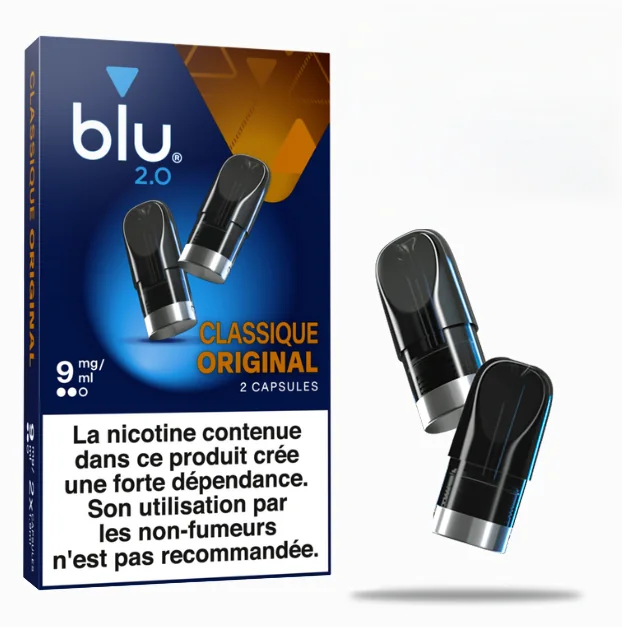
Prefilled pods are the simplest. The coil is built into the pod, so every refill brings a fresh heating element and none of the flavour drift you get as a coil ages. There is nothing to fill, nothing to prime and no wattage to set.
Refillable pods and tanks take 10 ml bottles, capped at 2 ml of capacity per tank under British rules. More work, more choice, and the ability to change flavour whenever you like rather than when the pod runs out.
Shortfills are the third route and the one that leads towards home mixing. A 50 ml shortfill sits in a 60 ml bottle and a 100 ml shortfill in a 120 ml bottle, with the headroom left deliberately so a 10 ml nicotine shot can be added. They arrive nicotine free, which is precisely why they can be sold in those sizes at all.
Matching an e-liquid for beginners to the device
The same bottle behaves differently depending on what heats it. This is the part most first time buyers discover after the fact, usually by blaming the liquid.
A 50/50 base is the general purpose choice for pods and tight draw tanks. The propylene glycol carries the flavour cleanly and the liquid is thin enough to wick properly through a high resistance coil.
Glycerine heavy bases, typically 30/70, are aimed at sub ohm hardware that produces a lot of vapour. Put one in a small pod and it will struggle to wick, which produces the dry, burnt taste that gets blamed on the bottle rather than the pairing.
The coil resistance printed on the side is the deciding number, along with the wattage range next to it. Our guide to the vape coil explains how to read both and why staying at the low end of the range preserves the flavour.
Frequently asked questions
What nicotine strength should I start with?
That is a personal decision and no article can answer it for you. What is fixed is the framework: British bottles stop at 20 mg/ml, and the same figure feels different depending on whether it is freebase or salt and on how much vapour the device makes.
Is a 50/50 or a 70/30 base better to begin with?
A 50/50 base suits pods and tight draw tanks, which is what most first devices are. Glycerine heavy bases belong on sub ohm hardware and tend to wick badly in a small pod.
Why do British bottles only come in 10 ml?
Because nicotine containing e-liquid cannot legally be sold here in larger containers, at more than 20 mg/ml, or to anyone under 18. Larger bottles are shortfills, sold with no nicotine in them.
What is a nicotine shot for?
It is 10 ml of unflavoured base carrying nicotine, designed to be poured into the headroom of a shortfill. It is the simplest form of home mixing.
How do I stop a first flavour becoming boring?
Buy small, start with a legible profile, and keep two opposed families in rotation rather than carrying one bottle all day. Palate fatigue is far more common than a faulty liquid.
Putting the three settings in order
Strength first, flavour second, format third. That sequence avoids the spiral of successive purchases that puts so many people off in the first month, because a correct strength makes the flavour question secondary, while a badly judged one gets the flavour blamed unfairly.
Buy in small volumes while you are still calibrating, write down what you tried and what you thought of it, and change one variable at a time rather than three. Once those three are settled, everything after that is fine tuning, and an e-liquid for beginners stops being a gamble at the counter. If the tinkering appeals, our guide on how to make your own e-liquid is the natural next step.
Editorial content for adult readers only. Vaping products usually contain nicotine, a substance that causes addiction. Not for sale to under-18s in the United Kingdom. This article is not a buying recommendation.